
How a Degree in Theater Helped Me Become a Better Copywriter
When I was a little girl, all I wanted was to be on stage.
I made my solo debut in the first grade (Candle on the Water from Pete’s Dragon 🥹), sang karaoke at family parties, and spent the majority of middle school and high school auditioning for plays and choirs.
By the time I started college, a theater degree wasn’t the plan. But I spent so much of that time rehearsing for productions, attending festivals, and taking classes that getting my Bachelor’s degree in theater just made sense.
Studying theater helped me develop countless life skills and shaped how I work with people.
But one thing I never expected it to prepare me for? A career in copywriting.
The theater to marketing pipeline I can’t stop talking about
When you think about all the career paths related to theater, marketing probably doesn’t come to mind. But it should.
There are many common principles that theater and marketing share.
Studying theater isn’t just about memorizing lines or conveying emotions on stage. It’s about studying human behavior. To tell a compelling story, you have to understand the deeper psychology motivating someone’s choices and beliefs.
And that’s what copywriting is all about.
So while I never landed my dream role on Broadway (it’s Peter Pan btw), I can’t help but feel like I got my dream job anyway. Because as a copywriter, I get to tell stories that change people’s lives every single day.
Here are 8 lessons my theater degree taught me that have made me a better copywriter:
Lesson #1: Know your character
When I first started writing copy, the biggest piece of feedback I got was how much the copy matched my clients’ voice.
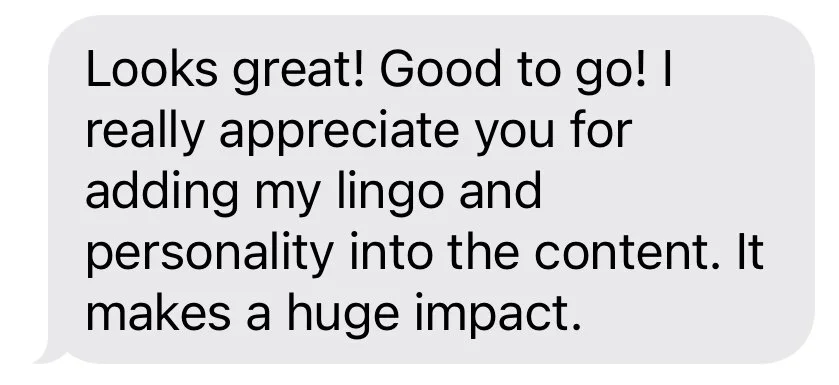
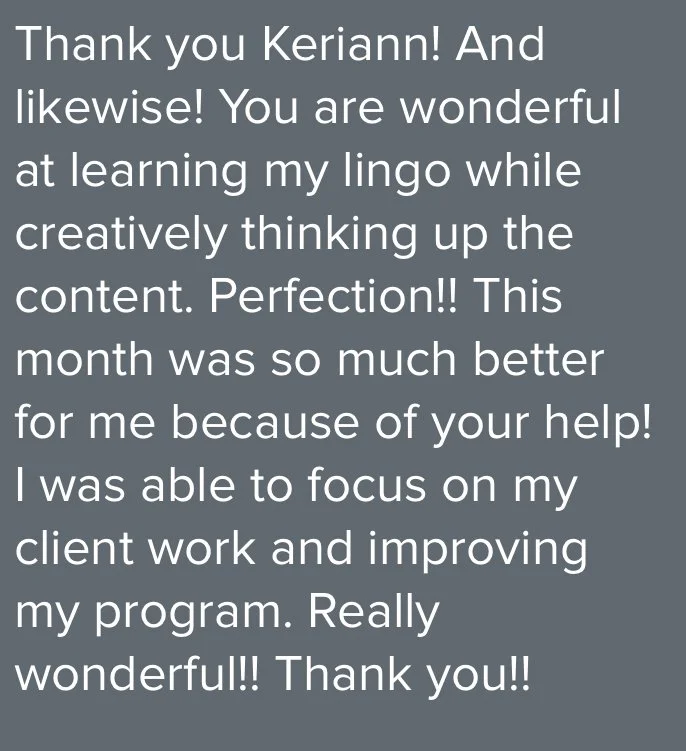
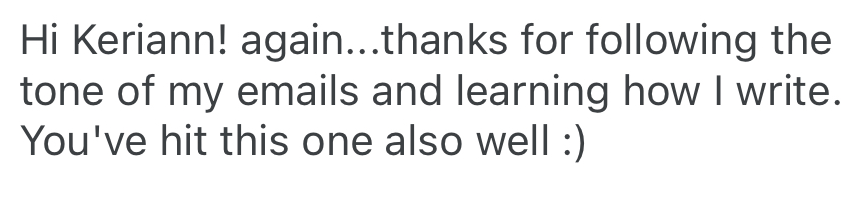
I thought this aspect of copywriting came naturally to me, but it’s actually a skill I learned in theater called character study.
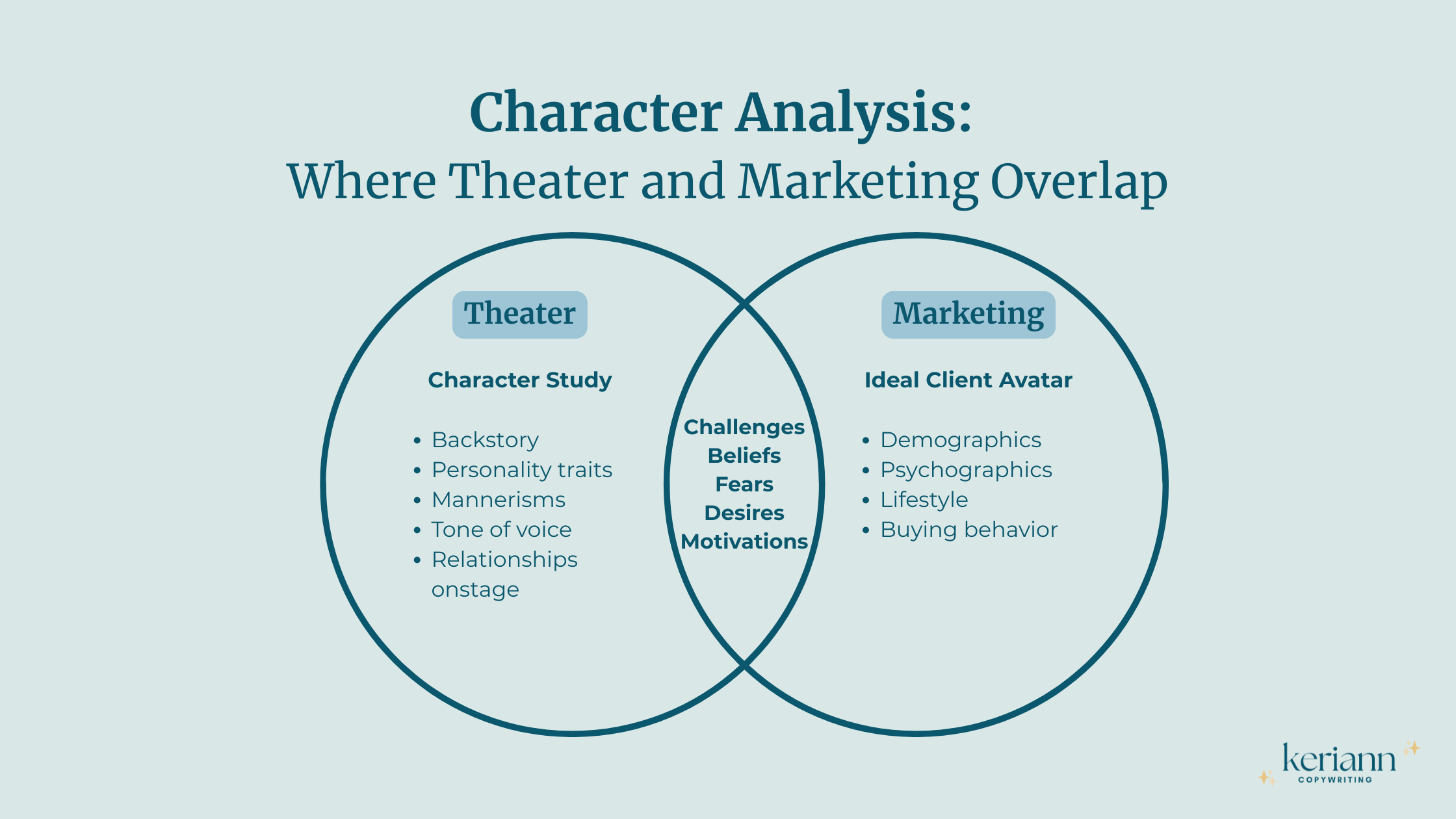
Character study is where you establish your character’s backstory, personality traits, beliefs, mannerisms, and tone of voice. It helps you understand the motivations and emotions driving their decision making.
In copywriting, I use this skill to develop my clients’ brand voice so the copy sounds like them. I integrate small details like their communication style and core values into the copy just like I would for a character in a play. This helps establish an authentic brand voice that readers can connect with.
Lesson #2: Know who your character is talking to
Character study goes beyond understanding your own character. You also want to explore the relationship he or she has to the other characters on stage. In marketing, we do this too, but we call it something different…
👉 Ideal client avatars
An ideal client avatar is a detailed profile of the person you're talking to in your copy. It helps you define:
Demographics like age, income, gender, and background
Psychographics like interests, values, and lifestyle
Core challenges, fears, desires, and beliefs
In my experience, character studies and ideal client avatars are pretty much the same thing. When I write copy for clients, I use what I learned writing character studies to create their ideal client avatar. This helps me write copy that is relatable, specific, and speaks to someone’s real experiences.
Lesson #3: It’s not about you
One of the biggest skills I learned as a theater student was how to collaborate with others.
A successful production is determined by the entire cast and crew working together to make the story come to life. Even if you land the lead role or spend more time on stage than anyone else, every choice you make as an actor should be in service to the production, not yourself.
In copywriting, the same principle applies—you are not the main character in your content, your ideal client is. As Donald Miller writes in his book Building a Story Brand:
““Brands that position themselves as heroes unknowingly compete with their potential customers.””
Before creating any piece of content, I always ask…”Why should the reader care about this?” And if the answer is, “They don’t”, then it’s not a good piece of content. By centering your ideal client in your copy, you stand a better chance of hooking their attention and building a stronger relationship.
Lesson #4: Why now?
You probably remember in English class that storytelling follows a specific structure—the exposition, inciting incident, rising action, climax, falling action, and resolution.
The inciting incident determines the pacing of the play by asking an important question every actor needs to answer: Why this story….now?
Why is this specific moment in time the moment in the characters’ lives that needs to be told? Why now instead of ten minutes from now? Or ten days from now? Or even ten years?
In copywriting, I ask myself these questions a lot. Specifically when helping clients craft their brand story:
What was the turning point in their journey that led them to the work they do today?
How did that moment change them and the way they see the world?
How does it relate to what their ideal clients are experiencing?
This storytelling principle can also be applied to sales copy:
Why is now the best time to invest in your offer?
What is happening in your ideal clients’ world that they can no longer ignore?
What do they stand to lose if they don't take action right away?
Which leads me to my next point…
Lesson #5: What’s at stake?
If the inciting incident is why a story exists, the stakes determine why an audience keeps watching.
If the stakes are too low, your audience won’t feel invested in what happens to the characters. Raise the stakes, and you’ll hold your audience’s attention until the end. This is a very common acting technique that creates urgency, heightens emotions, and builds momentum in a scene.
In copywriting, I use a similar technique by defining the ideal client’s “motivations for change.” These are the internal and external challenges or circumstances driving someone to take action.
You can uncover these motivations for your ideal client by asking questions like:
What’s at stake if they don’t change their current situation?
How will their life improve once they solve this problem or achieve these results?
What changes if nothing changes?
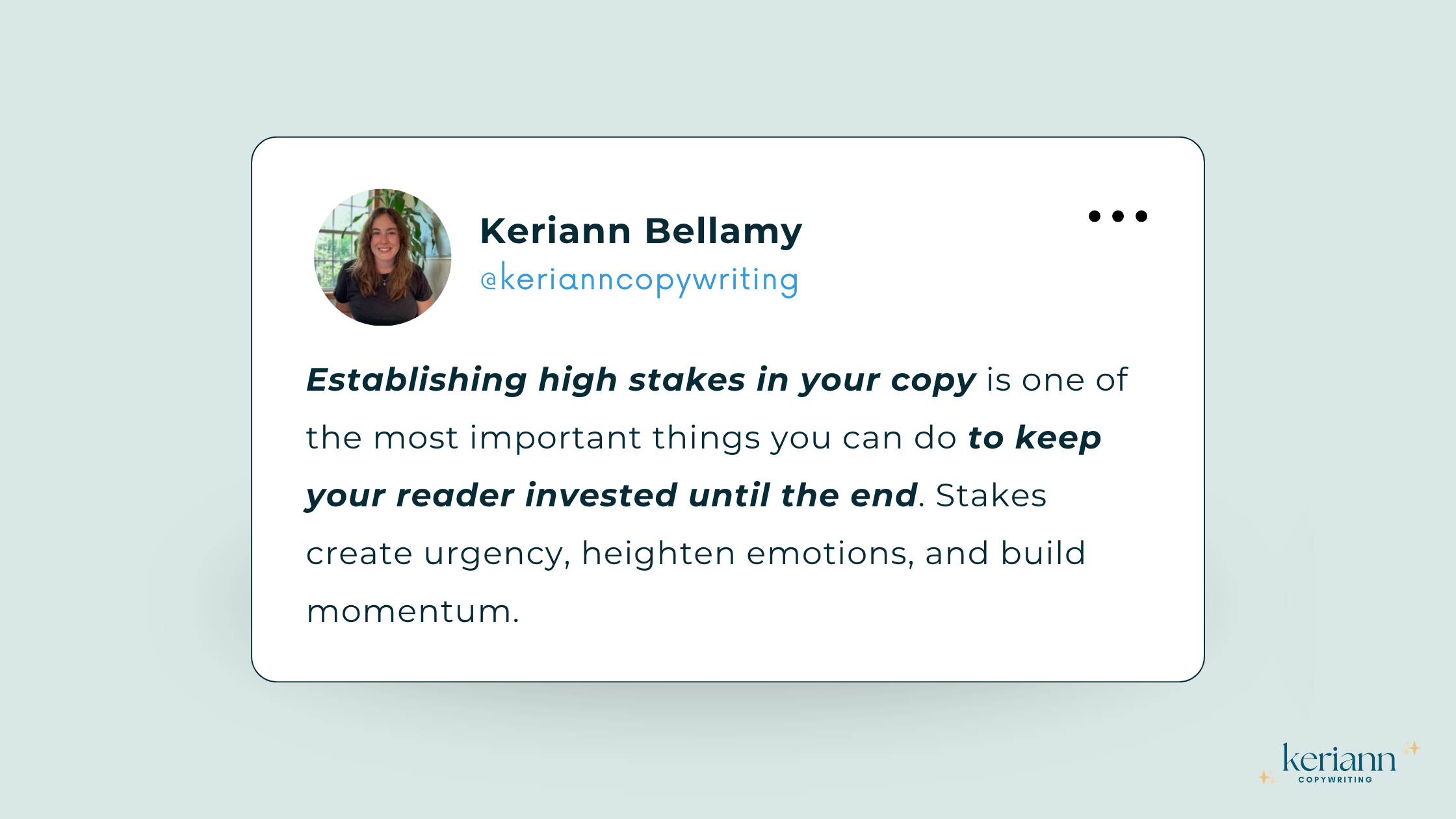
Establishing high stakes in your copy is one of the most important things you can do to keep your reader invested until the end.
Lesson #6: What are you really saying?
Another important job every actor has is understanding subtext. Subtext is the hidden meaning or intent behind what a character is saying. It’s the millions of small choices actors make that bring a script to life.
Take a simple line like, “Have a good day!”
On the surface, this line could be interpreted as a friendly and polite goodbye. But the character’s intentions can easily change the meaning of the line. If the character dislikes the person they’re talking to, it can be read as sarcastic (A.k.a “Go kick rocks.”). If the character is worried about that person, it’s read as more encouraging (“I hope you’re okay.”)
In copywriting, I use subtext to communicate the larger transformation I want the reader to walk away with. Instead of listing the features of an offer, it’s my job to communicate the benefits underneath.
If you offer group coaching calls as a part of your program, what’s the transformation associated with those calls, and how can make sure it’s communicated? For example, “group coaching calls” becomes “group coaching calls to get your questions answered in real time.”
These small details layered within your copy paint a much deeper picture, just like subtext brings a script to life.
Lesson #7: Say it again…but different
In every scene, actors break the script down into beats—the smallest unit of action that marks changes in tone and intent. Without beat changes, the characters' tactics remain the same, and the scene goes flat.
Copywriting works the same way.
You're often repeating the same core message, but saying it from different angles to keep the reader engaged. This is where popular copywriting frameworks like Problem-Agitate-Solution (PAS) or Attention-Interest-Desire-Action (AIDA) come in.
These frameworks offer different tactics to argue your point, motivating the reader to take the action you want. Just like a scene in a play, each section of copy has its own beat that moves the reader further along in their sales journey. (This is why sales pages have so many different sections, btw!)
Lesson #8: Say it clearly or not at all
One of the biggest lessons I learned as a theater student turned copywriter is clarity over style.
If you prioritize elements like music, costumes, lights, set pieces, blocking, or character work over the story, you lose the audience.
I see this happen all the time in popular television and movies. Directors want to make bold or flashy choices to communicate a big idea, but in the process, they sacrifice the story. (Hot take…this is why I hated the Barbie movie.)
Sometimes business owners or copywriters sacrifice clarity to sound clever or cute-sy because they think that will help their marketing stand out. But if the messaging isn’t clear, it just confuses people.
Theater taught me to trust your audience with the story you want to tell. You don’t need to dress it up in fancy language or flashy design. Instead, use those elements to support an already clear message, just like we use lighting, set design, costumes, and props to support the story.
Good copywriters are good storytellers
As it turns out, for me, studying theater was never about becoming an actor (just don’t tell that to my younger self please 😅).
Instead, I learned the skills I needed to understand people on a much deeper level so I can write copy that:
✨ Reflects the authentic voice and mission of my clients
✨ Speaks to their ideal clients real challenges, desires, motivations, and beliefs
✨ Moves readers toward action, one small beat at a time
If you’re looking for a copywriter who can capture your authentic voice and translate it into a persuasive copy, book a discovery call with me to learn how we can work together.
I offer custom messaging guides, email copywriting, and ongoing content marketing support to share your message with those who need it most.

Hey, there! I’m Keriann
I help online coaches, practitioners, and service providers turn their expertise into strategic and engaging content.
