
The Real Reason Your Content Isn't Bringing In New Clients
Spoiler Alert: You don’t have a content problem; you have a messaging problem. Let’s talk about it.
This article is for every coach, practitioner, or service provider who’s ever thought to themselves, “ I didn't start my business to become a content creator.”
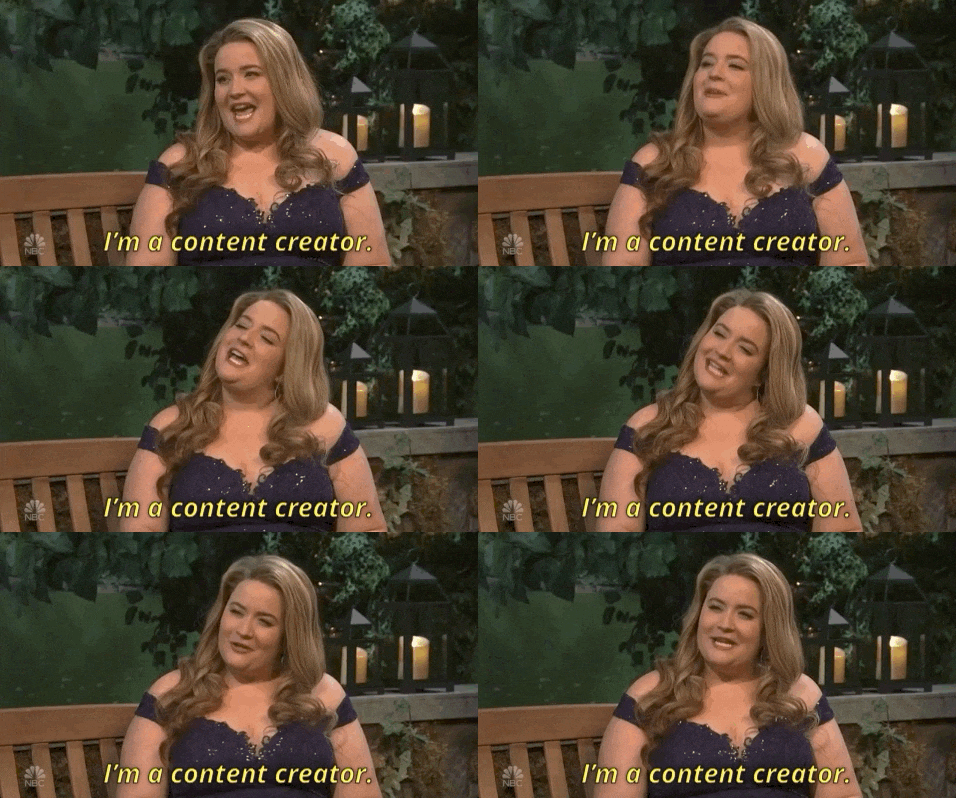
The reality of marketing your business online means that you have to create content in some capacity. Whether you’re building a sales funnel, or posting to your business’s Instagram or LinkedIn account, content marketing is the constant we’ve come to expect in today’s online economy.
But that doesn’t mean you have to reach influencer-level fame to run a successful business. I refuse to tell you that you have to build an audience of hundreds of thousands of people just to get clients. That’s not the business you signed up for, and it never has to be if you so choose.
So back to the question today’s article is answering: Why isn’t your content bringing in new clients?
Let’s start by addressing the elephant in the room….the algorithm.
The internet convinced you that it’s the algorithm’s fault
If you’re using social media to market your business, you’ve probably heard some version of this advice:
“You need to post everyday for the algorithm to push your content out.”
“Your videos have to look or sound like THIS or it’ll tank your reach.”
“Just use this [hook, trending audio, formula] and your account will blow up like mine did.”
The problem with this advice is that the algorithm doesn’t care about that stuff and it never has.
It’s not the algorithm’s job to bring you clients just because you’re posting consistently. It’s your job to show the algorithm who your clients are and why they should care about what you have to say.
And if that’s where you’re struggling most, you don't have a content problem at all; you have a messaging problem.
The difference between good messaging and trending content
A messaging strategy is the core message someone needs to hear from you before they're ready to buy. A content trend is the way that you format and distribute that message across different platforms (like Instagram!).
Many coaches who use social media to market their business get stuck chasing trends. Instead of investing in their messaging, they try to make their content look like other creators in their industry because they think that's what the algorithm wants and will reward.
But hear me when I say this:
If you haven't uncovered the messages that resonate with your ideal clients most (and tested them repeatedly), there's no magical hook or template that's going to ‘fix’ your content. This is why successful business owners invest in their messaging before chasing trends.
Signs your messaging could use some TLC
People engage with your content but aren’t interested in your offers
You give a different, vague, or unclear answer every time someone asks about what you do
Your content strategy relies on random ideas and inspiration from other people’s accounts
You never repeat the same messages twice
Someone could learn the same thing from your content by using Google or Chat GPT
If any of these situations feel familiar, it may be time to shift your focus from creating more content, and clarify your messaging strategy.
Start here: the three elements to a good messaging strategy
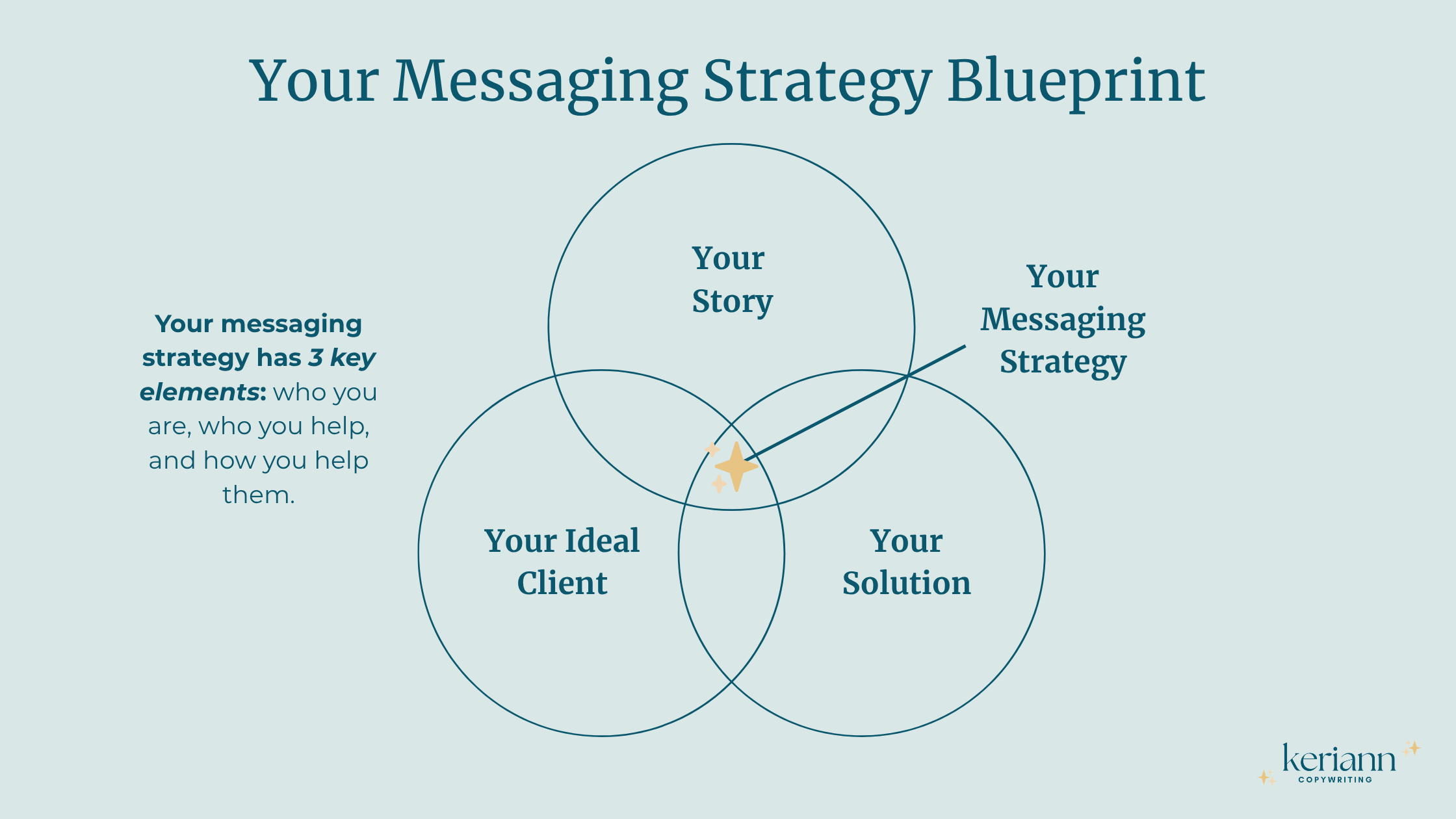
Developing a messaging strategy may sound complex, but it’s actually really simple. It all comes down to three key elements: who you are, who you help, and how you help them.
Once you understand how these elements work together and overlap, you can communicate the true value of what you have to offer (instead of copying someone else’s content or guessing what to post).
Who you are: your story
Your brand story is what sets you apart from others in your industry. It’s how you relate to the right people online. It’s the why behind the work that you do.
But as Donald Miller explains in his book Building a Story Brand, ““Brands that position themselves as heroes unknowingly compete with their potential customers.”
In other words, your brand story isn’t actually about you.
Sure, it’s the story of how you got to where you are today—the highs, the lows, and everything in between. But if it’s not centered around your ideal clients’ core challenges and beliefs, they have no reason to care.
✨ Try this: When forming your brand story, focus on the moments that connect most with your ideal clients. What starting point in your own life relates to their journey and how is it connected to the transformation you provide today? Was there a pivotal moment that changed everything for you?
Who you help: your ideal client
Understanding who you’re talking to in your content is about more than age, demographics, and basic likes and dislikes.
If you want your message to resonate with the right people, you need to understand their unique challenges, the way they think about their problem, and the specific experiences and beliefs driving their behaviors (key word: specificity).
The more you understand who your ideal client is, the less generic your content will sound. And the best way to do this is through market research!
✨ Try this: Build your market research muscle by consistently interviewing past clients, asking for feedback, and hanging out in your ideal client’s favorite online forums, communities, and comment sections.
How you help: your solution
Your solution is the piece that ties your messaging strategy together. It’s the unique process or framework you use to get your clients great results.
Think about it this way: if someone has been following your content for a while, but has no idea what you do or how to work with you, your content is closer to a hobby than a marketing strategy.
(I know that sounds harsh, but stay with me!)
Your content needs to do more than educate and inspire people. It must communicate what makes your solution the right solution for their specific problem. But many online business owners are afraid to come off as sales-y, so they avoid talking about:
Their unique process
Their client success stories
The details of their offer (a.k.a…how you can pay them)
As a result, people might be enjoying your content, getting to know you, and learning a lot, but they never become clients simply because they don’t know how.
✨ Try This: Get clear on the process behind your work and practice communicating it at least once a week. Sharing your process encourages people to picture what it’s like to work with you before they visit your sales page or book a call.
Your work is bigger than algorithms
Remember, you didn’t start your business to become a content creator. You started it to give people the transformation only you can provide. And I’m pretty sure that’s worth investing in, my friend.
If you’re ready to invest in your messaging strategy, my Content Clarity Guide is the best place to start.
This custom messaging guide will clarify the three key elements we talked about today—who you are, who you help, and how you help them—so you can create content that:
Speaks from your lived experience, not AI
Resonates with dream clients core challenges and beliefs
Positions your offers more strategically
Book a discovery call with me to learn more about what’s included in the guide and how to get started below:

Hey, there! I’m Keriann
I help online coaches, practitioners, and service providers turn their expertise into strategic and engaging content.
