
How to Write a Killer Case Study That Turns Subscribers Into Dream Clients
Follow this 5-part framework so your client success stories can become your biggest sales tool
Case studies are one of the most effective types of content to turn followers, readers, and subscribers into dream clients. But many business owners put off writing them because they don’t have a clear process to follow.
And that’s a real shame because you’ve likely helped many people overcome significant challenges that deserve to be shared and celebrated.
That’s why I want to offer the case study framework I use to simplify this process so you can showcase your clients’ results. Even if you don’t have a specific case study in mind right now, by the end of this article you’ll know how to:
Set up a repeatable system for gathering client feedback
Choose a compelling angle so your case study has a clear transformation
Turn traditional testimonials into engaging and story-driven content
First thing’s first…what qualifies as a case study?
I want to let you in on a little secret…I used to be really intimidated by the idea of writing case studies. They felt like something only established brands with impressive budgets were allowed to publish on their websites.
I thought I needed statistics and pie charts and flashy numbers to signify a client’s success. If you’ve felt that way too, allow me to demystify things for you…
A case study is simply a client success story told with journalistic intent. And that story can be told in many different ways. Here are just a few formats you can use:
Video interviews
Long-form blog posts or articles
Newsletters or evergreen emails added to an email sequence
Carousel posts
…and so much more!
Your only goal is to capture your client’s authentic experience and then paint a compelling picture of their results.
The process does require a bit of data collection and thoughtful investigation, but it doesn’t have to be complicated. Once you understand the framework, you can turn any positive client experience into a well-crafted case study (no pie charts required).

Step 1: Choosing an ideal candidate
The strongest case studies tend to be intentional and specific.
If you're just getting started, don't overthink this part. Any client who had a positive experience and is open to sharing is a great first candidate.
If you already have a growing library of case studies or clients to choose from, start thinking about what makes each client's story unique. Is there someone with a specific challenge, journey, or result that sets them apart from the rest? The more specific, the better.
Step 2: Gathering your client’s story
Many business owners collect testimonials and stop there. But a testimonial is not the same as a case study!
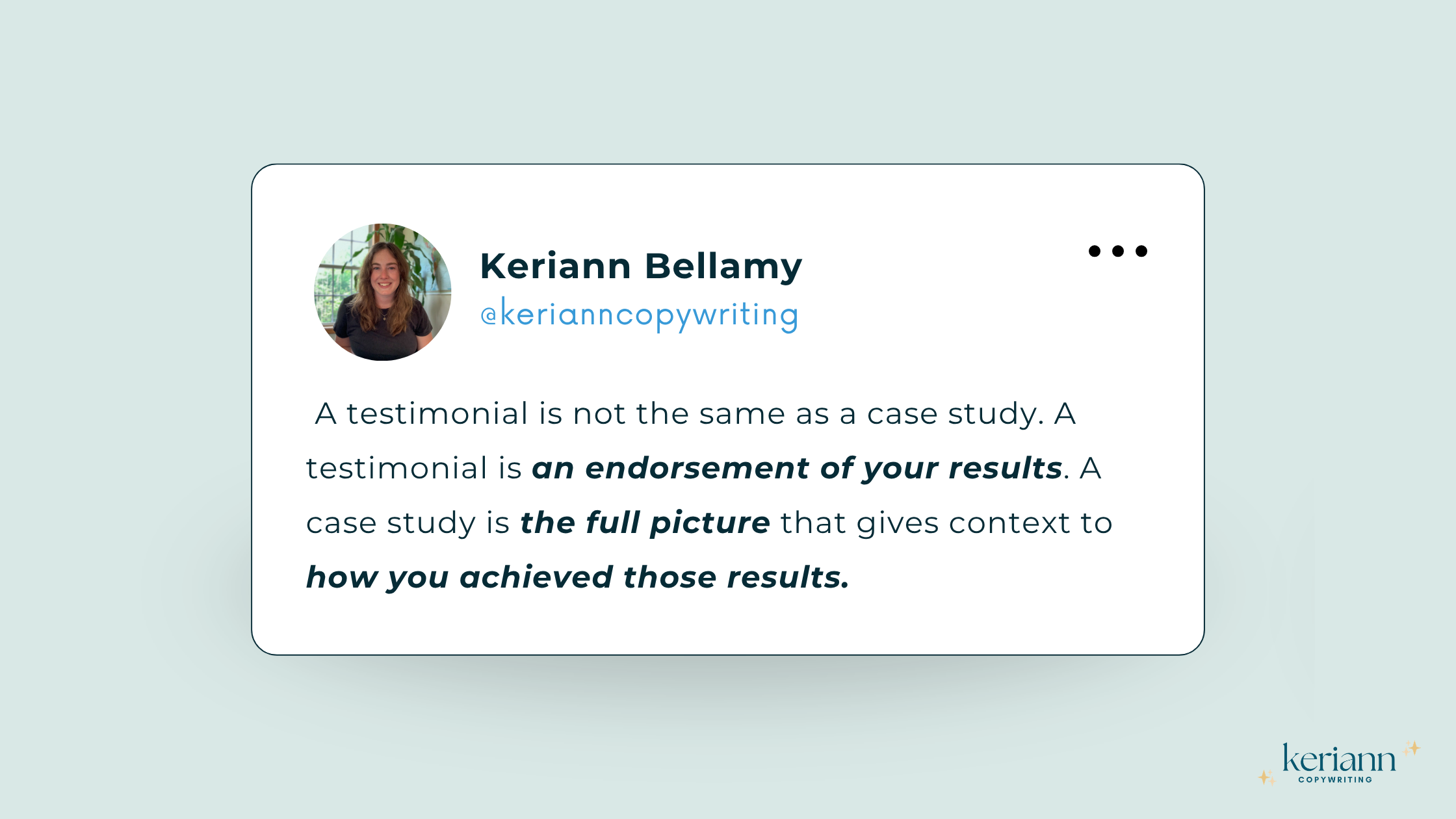
A testimonial is an endorsement of your results. It's the "she was amazing to work with and I'd recommend her to everyone!" that lives in the middle of your sales page. A case study is the full picture that gives context to how you achieved those results.
If you want to write a compelling case study, you need more detailed feedback told in the client’s own words. Here are two ways to capture their experience:
Method 1: Request a video interview
The most effective way to capture your client's story is to get them on a recorded video call. This may sound like a big ask, but in my experience, clients who enjoyed working with you are a lot more willing than you’d expect!
Once they’ve accepted your invitation to hop on a call, your job is simple:
Ask them a series of questions that follow the framework I share below.
Sit back, let them talk, and activelylisten.
…Oh, and make sure you hit record! From there, you’ll use the transcript from this video as the foundation of your case study.
Method 2: Send out a survey
But what if you don’t work one on one with clients, or the nature of your work is more hands-off?
In some instances, it may make more sense to send clients a survey with the same questions you’d ask on a call so they can fill it out in their own time. The tradeoff is that you lose the natural insights that come from a real-time discussion. But a thoughtful survey still gets you what you need: their experience written in their own words.
Add these methods to your offboarding process so you can consistently gather feedback from clients for future content.
✨ Wondering which questions to ask your clients? Download my FREE checklist: 8 Questions to Ask Clients at the End of Every Project ✨
Step 3: Craft your case study
Here is the storytelling framework I use and recommend to turn case studies into engaging content your ideal client can relate to:
The Before:
Start your case study by introducing your client. Who are they and what were they struggling with before they started working with you? How were those challenges impacting their quality of life? What solutions had they already tried? Why weren’t they working?
Make sure you center this section on the challenges most relevant to the results you helped them achieve (excluding irrelevant or distracting details).
The Turning Point:
Once you’ve set the scene, shift focus to the exact moment they decided to work with you. What was motivating them to take action? Why couldn’t they wait any longer to get support or make a change?
This is also a great opportunity to highlight why they choose you specifically. Was it your background, your process, or a good feeling they got after meeting with you? Make sure to include this detail so you can communicate what sets your work apart.
The Journey
This is where you walk the reader through what it was actually like to work with you. What steps or process did you follow to help your client achieve their goals?
Make sure you include any setbacks or challenges your client faced along the way. These setbacks help your reader see themselves in your client’s story, making the content more relatable. It also gives you the opportunity to explain how you overcame those challenges, so you can address any doubts your reader might have about working with someone like you.

The Results
When it comes to sharing results, I recommend splitting them into two buckets.
First share quantitative results—the concrete, measurable outcomes your client achieved. Here are a few examples based on different niches:
Business coaches: Increased revenue and clients or new business assets
Health coaches and practitioners: Improved lab markers and symptoms or medications reduced
Marketers: Increased metrics, leads, and sales
Systems experts: hours and money saved, tools consolidated, processes automated
You also want to share qualitative results—the emotional transformation your client achieved. How does your client feel now that their problem is solved? What can they do today that wasn't possible before?
This two-pronged approach builds credibility while connecting to the human experience behind the numbers.
The Takeaway
Wrap up your case study by sharing the main takeaway from your client’s success story. What is the biggest insight, lesson, or positive change they’re taking from this experience? What would they say to someone else considering this work? This is a great place to feature a direct quote or testimonial from your client.
Before you finish the case study, make sure you include a call to action inviting your reader to take the next steps! Whether that’s to book a call with you, visit your sales page, or purchase a product, don’t forget to ask for the sale.
A few final tips before you start writing
Choose one clear angle: Even if you helped your client achieve multiple results, pick the one that tells the strongest story. This is especially important if you tend to get similar results across clients. A focused angle makes each case study feel distinct and intentional rather than repetitive.
Weave in quotes and screenshots: Don't save your client's words for the end. Sprinkle them in as you go so the story feels grounded in their lived experience. You can also include screenshots of your work to make the content more authentic and engaging.
Get permission before publishing: It’s always a good idea to make sure your client is comfortable with what you plan on sharing (especially if you’re including photos, videos, or screenshots!). Send them a simple note to express your gratitude and celebrate your shared success.
✨ And don’t forget to download this FREE checklist to get started: 8 Questions to Ask Clients at the End of Every Project ✨
Need help publishing your case study?
If you need support tackling case studies and other types of content on your list, book a call with me to learn more about working together!
I help coaches, practitioners, and service providers just like you create strategic and engaging content that:
✔️ Showcases their expertise
✔️ Builds relationships
✔️ Positions their offers
…so they can turn followers, readers, and subscribers into dream clients. Book a free discovery call below and let’s chat about what content support can look like in your business!

Hey, there! I’m Keriann
I help online coaches, practitioners, and service providers turn their expertise into strategic and engaging content.
