
7 Things I’d Never Tell You to Do as a Content Marketing Strategist
A.K.A: How to stop hating your content and build a more sustainable and enjoyable marketing strategy
I want to start this article with a question that’s been on my mind lately:
When did content become the one thing in our business that we hate more than anything else?
Everytime I hear someone talk about creating content, I can practically feel their anxiety, loathing, or disinterest seeping through the screen.
And I think it’s time that we collectively take responsibility for this attitude and get to the bottom of it. Because at the end of the day, creating content is simply a part of our business that needs to get done, just like replying to emails, sending invoices, or connecting with clients.
So why do we feel so icked out by it? Well…I have a theory.
The more disempowered marketing coaches can make you feel about why your content isn’t working, the more shitty advice they can sell. And as a content strategist, I’m getting pretty tired of content being the one thing that every business owner dreads.
Even if you’re ready to outsource your content and never do it yourself again (more power to you!), you should still feel good about the process! So that’s why I want to share a few pieces of content marketing advice I’d never give to you or any of my clients.
Strap in..it’s about to get spicy! 🌶️
“Just post more content if you want better results”
I’m about to contradict myself, so stay with me:
Consistent effort is the most basic and boring ingredient behind every successful content strategy. Without it, you have no data to test what’s working. Plus, people need to be reminded often who you are and how you can help them.
And if hearing that stresses you out, consistency looks a little different for everyone. There are plenty of ways to “be consistent” with your marketing without posting 5-10x per week…automated emails being one of them!
However…
If your existing content isn’t driving engagement or conversions, posting more content isn’t the right solution for you...yet. In fact, it’s just going to add more noise to an already loud and competitive space (and more work to your plate).
Before you focus on creating more content, make sure the content you’re already sharing is resonating with people. If it is, then you can start setting realistic goals to post more frequently and expand your reach. But if it’s not, you don’t have a content problem, my friend. You have a messaging problem and being “more consistent” isn’t going to fix it. (Here's what will.)
“You need to be on as many platforms as possible”
Similar to “just post more,” this piece of advice feels really impersonal, unsustainable, and unhelpful. Being on more platforms may increase your reach, but that reach means nothing if the quality of your content is compromised, or you aren’t connecting with the right people.
You don’t need a podcast, a YouTube channel, a TikTok following, a million connections on LinkedIn, an SEO strategy, and an engaged email list to promote your business. You really only need three platforms (tops) to create an effective content strategy:
A long-form content channel
A short form content channel to repurpose your long-form content to
An email list to promote your content and algorithm-proof your business
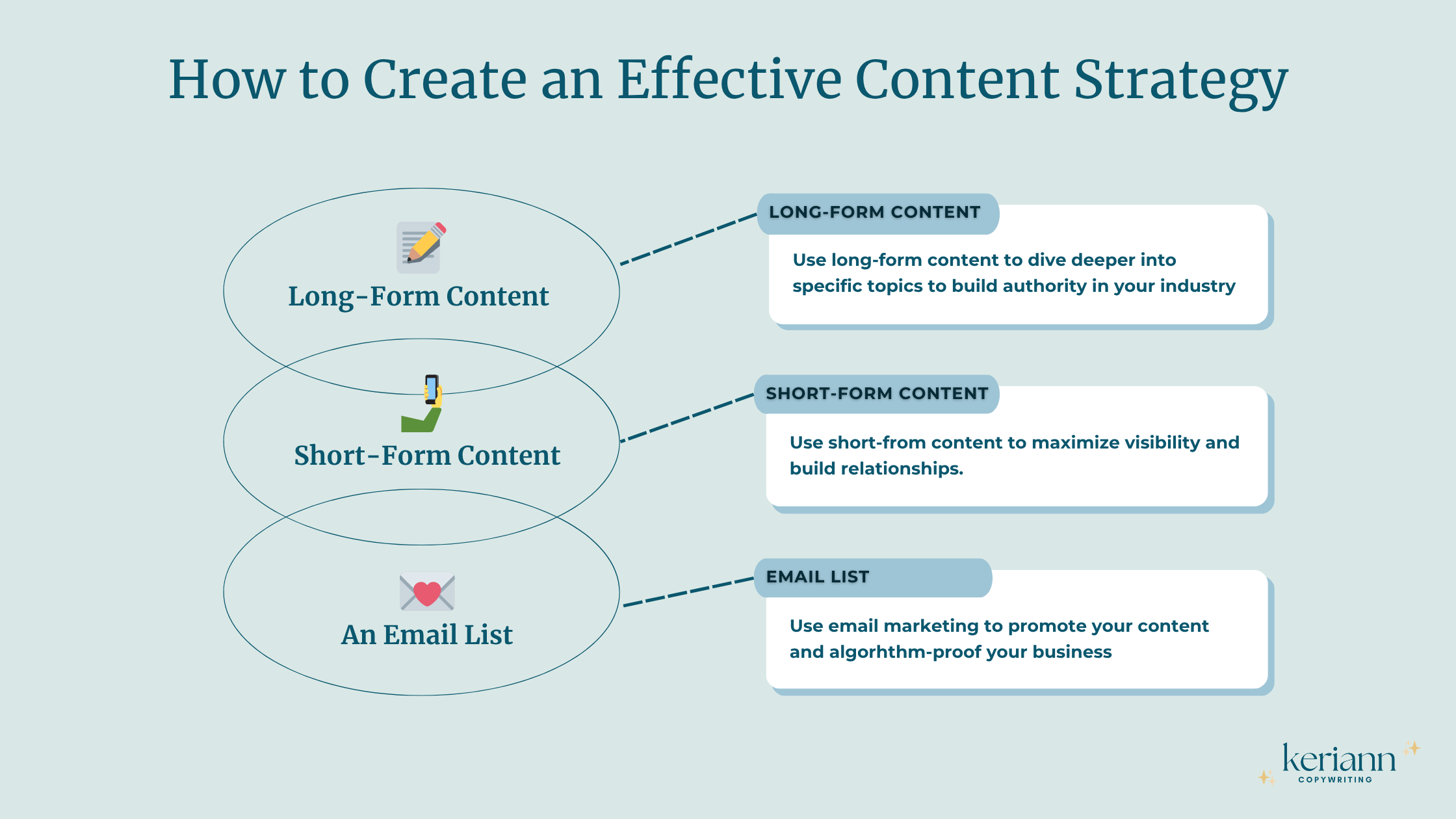
And if you only have time for one or two of these things, choose what works best for you and build from there! That way you can free up your time to create the best content you can while nurturing authentic relationships on a platform you enjoy.
“Going viral is the best way to grow”
As an industry, we’ve become obsessed with using vanity metrics like reach, followers, and likes to measure success. And as a result, “going viral” has become the gold standard for whether or not you’ll fill your client roster next month.
I’m not going to lie—visiblity is a huge asset when it comes to marketing. If this blog post went viral tomorrow, I’d be pretty stoked about it! But you’d be surprised by how many content creators struggle to convert large followings into paid clients. More eyeballs doesn't automatically mean more sales.
The obsession with going viral has turned content into a game of sameness—replicating trends, hooks, and aesthetics until we’re an exact match for what we think the algorithm wants to see.
Which (in my opinion) creates a lot of boring content. 🥱
Visibility is a good goal to work towards, but it’s not the only way to measure success. Don’t let vanity metrics distract you from creating the content you want or working towards other marketing goals that can move the needle much farther.
"You have to be on social media if you have a business"
Like I mentioned above, social media is a great tool for visibility and building relationships. But you don’t need a large following to grow your business.
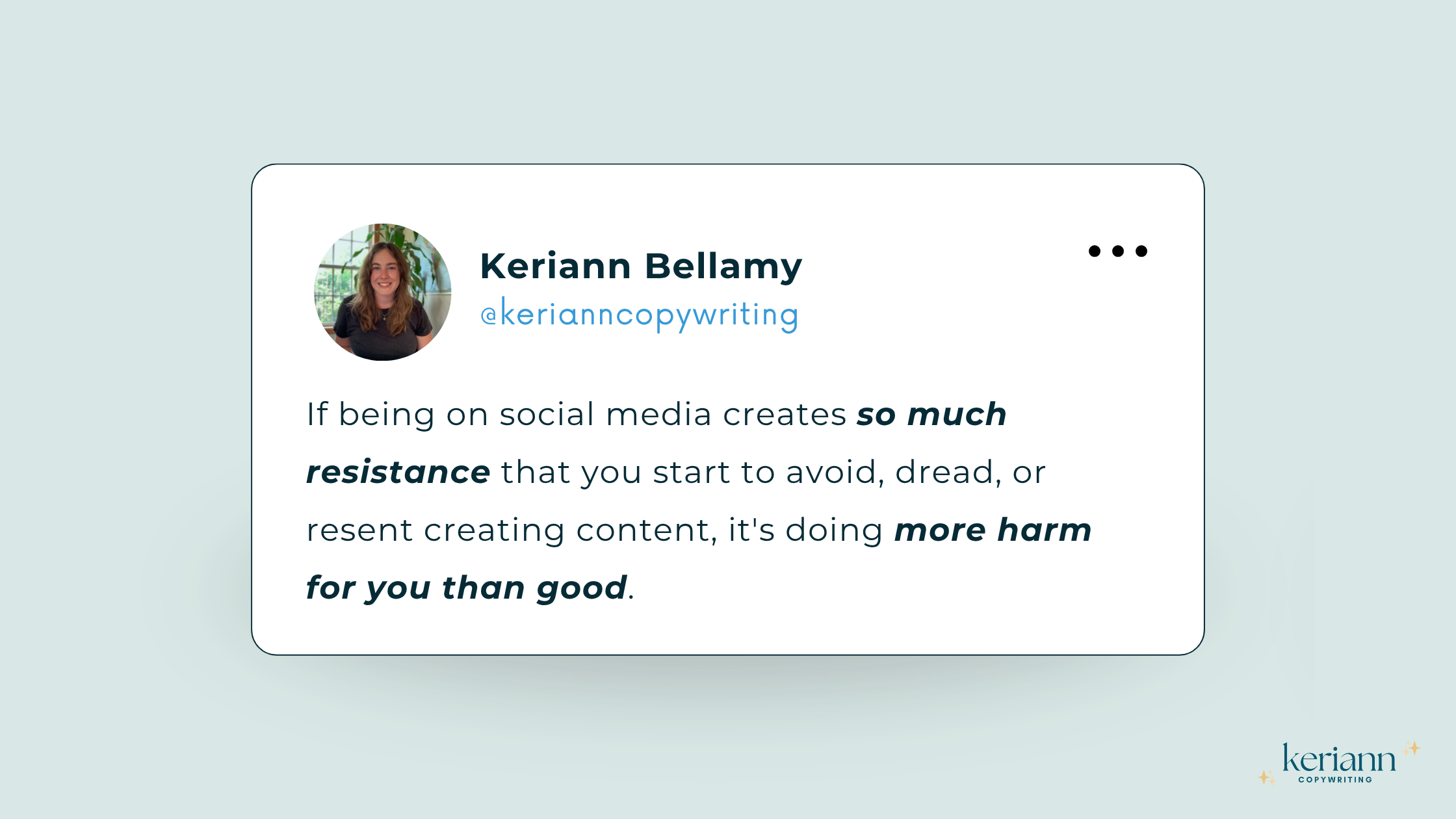
If being on social media creates so much resistance that you start to avoid, dread, or resent creating content, it's doing more harm for you than good. Resistance leads to inconsistency, inconsistency creates a story about why marketing doesn't work for you, and that story becomes the reason you never build any momentum.
Why not refocus all that stagnant energy into a platform you actually enjoy?Whether that’s writing, speaking, teaching, or meeting people IRL, there are plenty of ways to build a marketing strategy without being on social media. (And if you still want a social media presence, you can hire someone like me to repurpose that content to social media for you.)
The goal is to find a place you can build trust and showcase your expertise with people who want to work with you.
“These hooks and email templates will fix your messaging"
Think of a template or hook bank as training wheels for your marketing copy. They can be a great starting point to get the ideas flowing, test messaging angles, and learn different persuasion techniques.
Or better yet, think of them like a sandwich. The template is the bread holding everything together, and your messaging is the filling. If you fill your sandwich with bland ingredients, it will still be a sandwich, but not a very tasty one.
To make a good sandwich (like Michelin-star worthy), you must have a clear understanding of who your ideal client is and what they’re going through. Relying on templates to “fix” your marketing is a shortcut that will only cost you in the end (because we all get sick of PB & J at some point).
Instead, use templates as training wheels to build confidence in your messaging over time. And the more you invest in your messaging, the better you’ll get at writing copy that resonates on your own.
“This strategy worked for this person so it will work for you too”
Like I said, there are about a million strategies to market your business online.
Webinars and live launches…
Tripwires…
Paid ads…
Facebook groups…
DM strategies…
Challenges…
Summits…
Affiliate marketing…
The list goes on and on.
And while some strategies have a higher ROI than others (like email marketing), there’s no one strategy that works for everyone. And yet, there are a million programs selling pre-built funnels that promise specific results.
I’m not here to yuck anyone’s yum. If there’s a strategy that works well for someone, it makes sense that they’d want to teach it to other people (and make some money doing it!). And if that strategy or approach resonates with you, it might be a really helpful starting point.
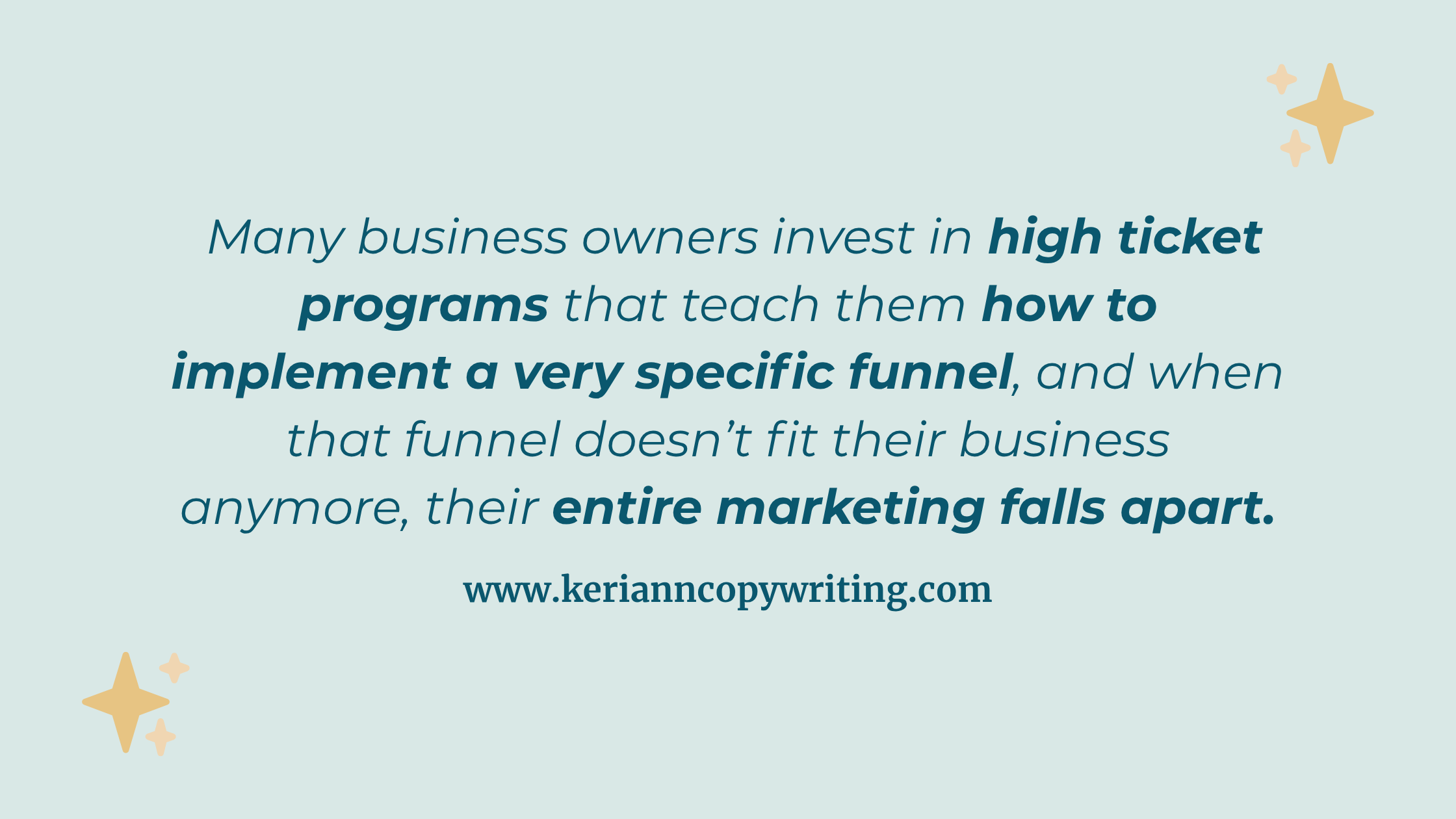
But I’ve also seen a lot of people invest in high ticket programs that teach them how to implement a very specific funnel, and when that funnel doesn’t fit their business anymore, their entire marketing falls apart.
If you want a sustainable marketing strategy that grows with you over time, it needs to be yours. In other words…flexible, adaptable, and customized to fit your business’s unique needs.
“What worked 2 or 3 years ago doesn’t work anymore…”
I really hate when people say this for two specific reasons:
It’s discouraging.
It’s a blanket statement that’s not true for everyone.
Here's what I think is actually happening when someone says this: A strategy that used to work for them stopped working because their audience went cold or their business changed, and they turned that personal experience into a universal one.
Think of it this way:
If you're still experimenting with your marketing and someone with a big platform tells you that live launching doesn't work anymore, or that a certain platform is a waste of time, you're probably going to believe them. And then you're going to feel really discouraged about marketing your business.
Take Facebook groups for example. Back in 2018, every business owner on the internet was using Facebook groups to sell their programs. And while the popularity of Facebook groups has shifted, plenty of people still use them with great success; they’re just using them a little differently than before.
And that’s because marketing trends come and go, but the marketing principles underneath stay the same.
Take any copywriting course, and you’ll find the same few books listed under the recommended reading. One commonly recommended book, Influence: The Psychology of Persuasion, was written 40 years ago, and yet the principles Cialdini teaches are still taught in marketing today.
So if someone says to you “What worked in 2020 doesn’t work now,” they’re probably referring to a marketing trend, not the marketing principles that made it successful.
How to stop feeling “meh” about your content
If content is the one thing in your business that you dread doing, it might be because you were sold some pretty terrible advice.
My goal as your content strategist and copywriter is to help you blend your authentic message with persuasion-driven copy so you can create strategic and engaging content that you’re excited to publish.
Because a good marketing strategy isn’t based on a one-size-fits-all template. It’s built together, in conversation, through a genuine understanding of your business.
““Honestly, I cannot stress enough just how impressed I am with how you were able to fully understand & appreciate the intentionality behind Intārya with such clarity in just the space of a few hours of getting to know me. I also feel that the tone & style used throughout your marketing material is spot-on; the perfect balance between inspiring yet professional. Thank you so much for your attention to detail. So excited to continue our work together.””
I work with coaches, practitioners, and service providers who are ready for a more collaborative approach to marketing. If that sounds like you, book a discovery call with me, and let’s talk about how you want your content marketing to feel!

Hey, there! I’m Keriann
I help online coaches, practitioners, and service providers turn their expertise into strategic and engaging content.
