
Read This If You Want Your Marketing to Feel Easier and Less Exhausting
If marketing feels exhausting right now, you've probably diagnosed the problem a hundred different ways. Maybe you think you need to post more consistently. Or find better hooks. Or try a different platform. Or push through the discomfort of putting yourself out there.
Here's what I’ve come to realize after supporting dozens of clients with their content:
Many marketing problems aren’t happening in isolation. They’re symptoms of the same root cause: unclear and inconsistent messaging.
Once you clarify your messaging, something interesting happens…
…Content ideas come to you more easily.
…You’re excited to talk about what you do.
…Marketing yourself feels less performative and more impactful.
…You start booking unexpected referrals and exciting speaking opportunities.
…Sales calls feel like a conversation with a friend, not a pitch.
All of these things are possible once you understand your messaging—who you are, who you help, and how you help them. But not enough business owners actually invest in getting this part right.
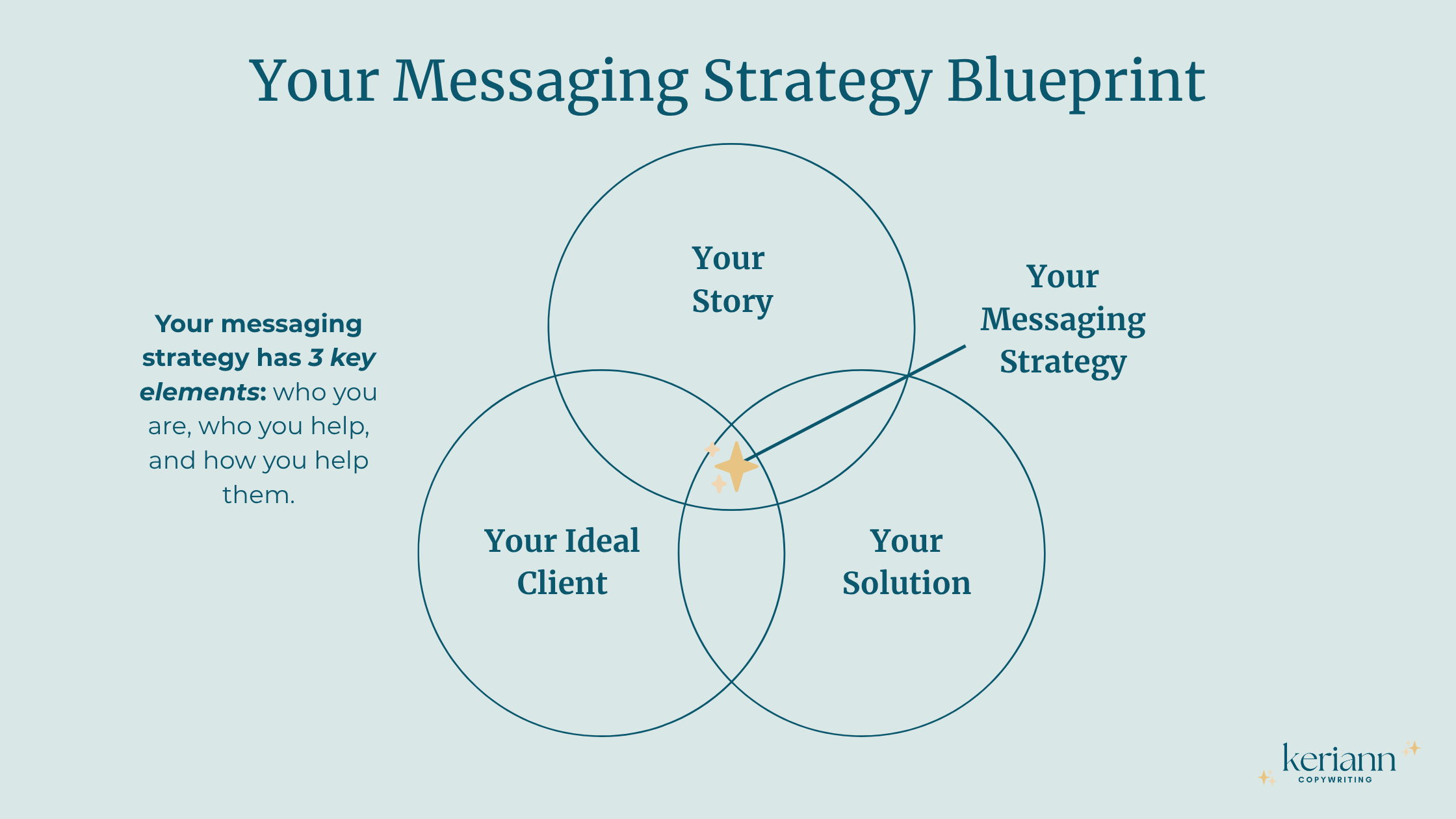
They may take a free workshop and fill out one of those ideal client avatar worksheets. Or maybe they have a Google doc somewhere that lists their brand values and mission statement.
But nowhere do they have their full brand story, ideal client profile, and unique positioning mapped out to refer to when creating content. And because I think this is so important (and often underrated), I want to paint an even clearer picture of why this is such a worthy endeavor.
Here’s what becomes possible for you and your content once you clarify your messaging strategy:
You stop staring at a blank page
Marketing feels more tedious and exhausting when you’re constantly starting from scratch. Especially if you’re cranking out daily content. 😵💫
The "just wing it" mentality stops working once you start posting more consistently. Spending your mornings scrolling for a hook, digging through your notes app, and hoping the right idea appears isn’t a sustainable strategy.
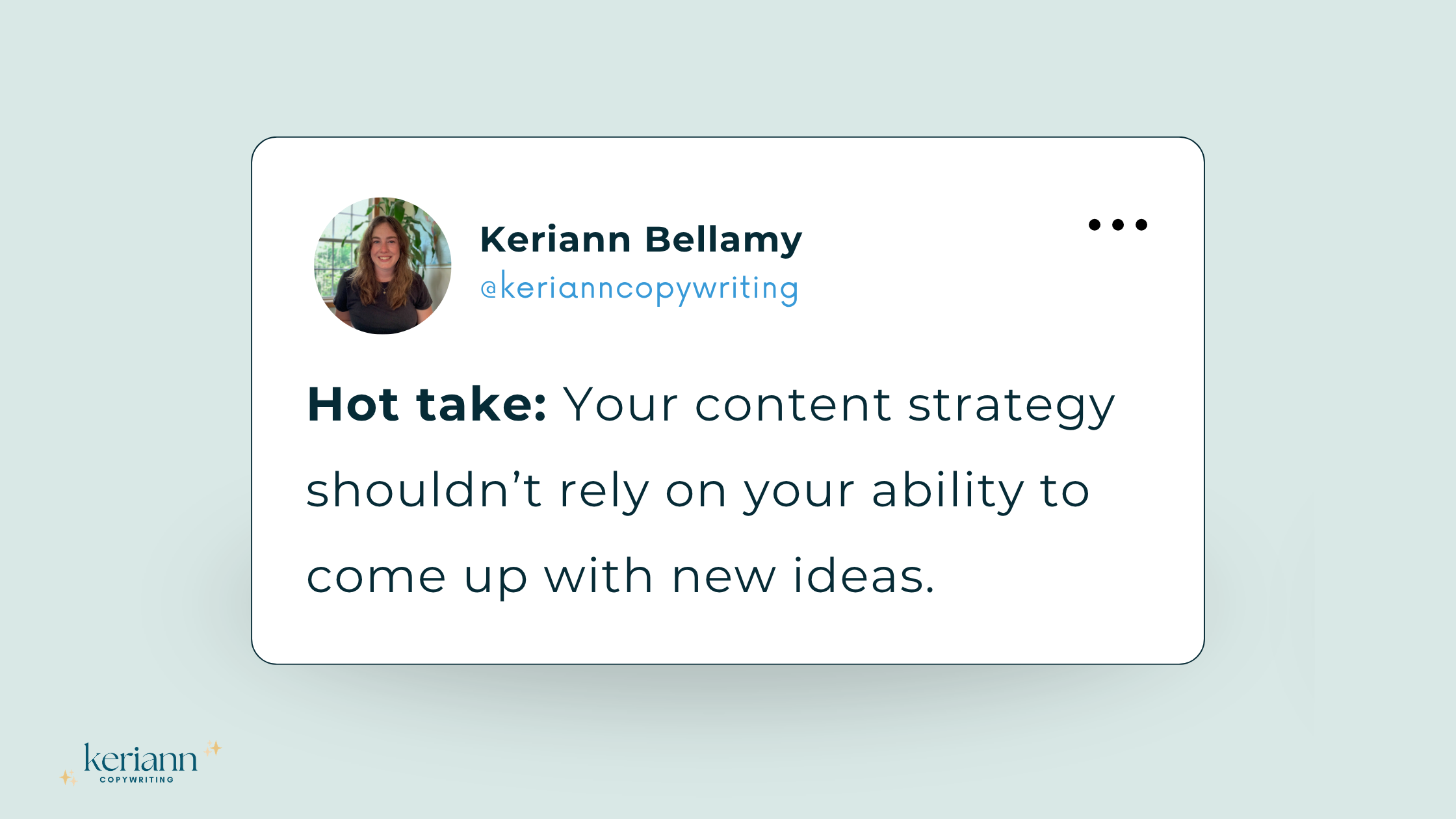
This is why you shouldn't base your content strategy on your ability to come up with new ideas.
When you solidify your messaging first, you can stop asking yourself, “What the heck should I post?” because you already have it laid out in front of you. You’re no longer doom scrolling for inspiration or relying on random ideas you scribbled down at 2 am.
This doesn’t mean you have to stop posting those ideas altogether (we love your random 2 am thoughts!).
But when you know exactly who your ideal client is and the problems they’re struggling with, coming up with content ideas becomes a lot easier.
Your content feels more like “you”
Being strategic and sounding authentic in your content is a hard balance to strike. Either you write from the heart and hope it converts, or you follow someone else’s template and lose your voice along the way (and sound like every other person using it… boring!).
Your content strategy shouldn’t be based on someone else’s marketing playbook. It should reflect your unique experiences, expertise, and the mission behind your work. This is why I firmly believe that copy/paste templates won’t work if you don’t understand your messaging.
A strong messaging strategy helps you reach the right people without sacrificing your values and perspective. It helps you communicate those things clearly in your content so you can build deeper and more authentic relationships.
When your content starts feeling more like “you,” you stop performing for the algorithm and attract people who are the right fit for what you have to offer.
Your content stops sounding like generic AI slop
With the rise of AI, there’s no shortage of generic slop making the rounds online. And let’s be honest—we’re all trying to spend less time scrolling on our phones, not more. Which means attention is a precious resource that shouldn’t be wasted on generic messaging.
Refining your messaging helps you understand your unique positioning (a.k.a: what makes your solution/framework/process different from someone else’s?). When you understand your positioning, you can communicate your experience in a way AI never could.
Consider the difference between these two hooks:
“5 tips to heal your gut”
“Here are the exact steps I’d take if I wanted to stop feeling bloated after every meal and fix my gut issues before the holidays”
The first hook is based on generic messaging anyone could Google. The second is based on a unique problem your ideal client is facing, and the specific solution you’d implement based on your experience.

A strong messaging strategy reflects the depth of your expertise—the nuanced, hard-earned, juicy ideas—not surface-level tips anyone could post.
You stop switching strategies every few months
Be honest… How many times in the past year have you switched strategies because it wasn’t delivering immediate results?
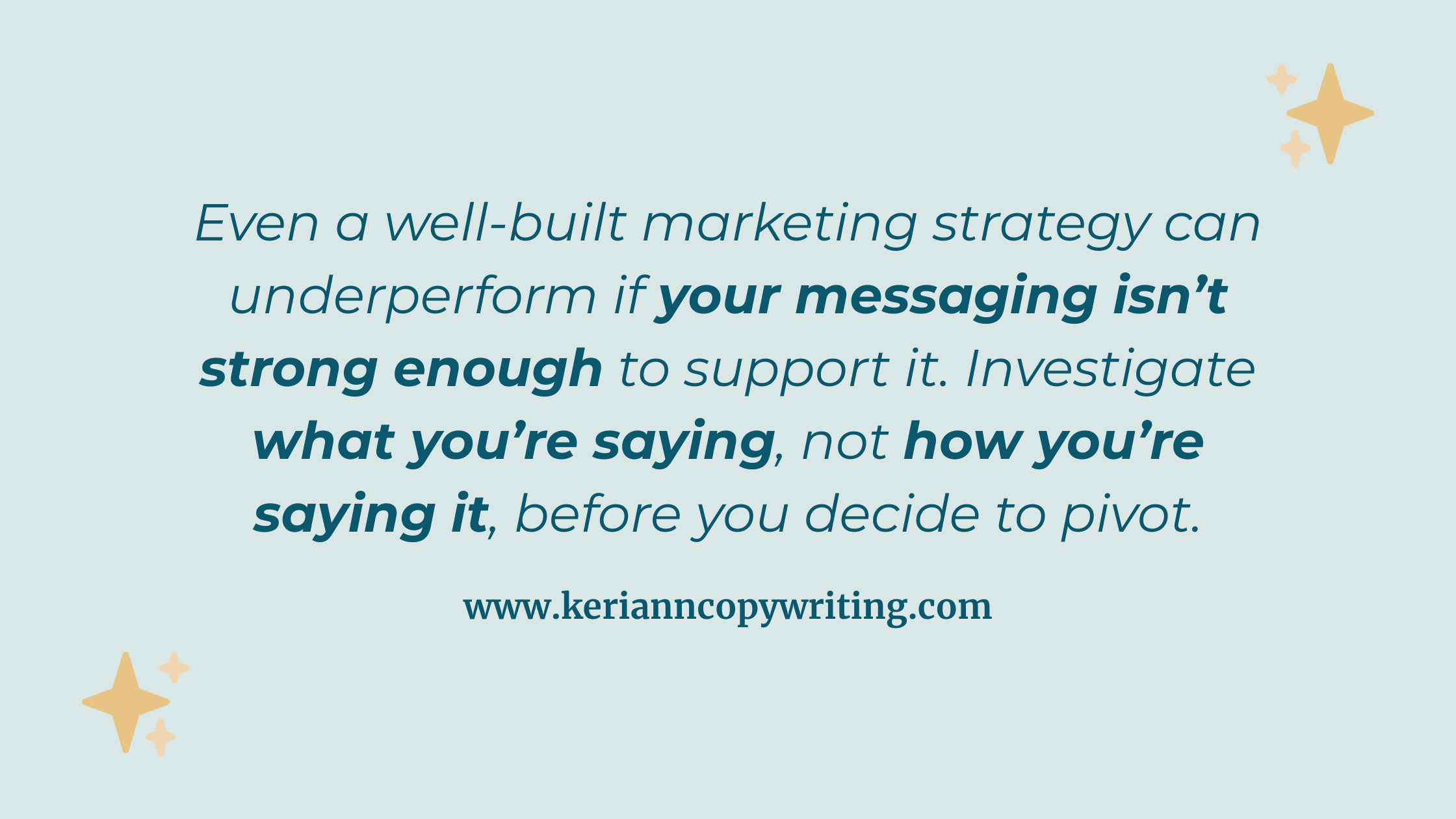
This might not be a discipline problem at all, but a messaging problem. Even a well-built strategy can underperform if your messaging isn’t strong enough to support it.
Optimizing your funnel for the hundredth time or abandoning your podcast because listeners aren’t turning into clients isn’t always the answer. Sometimes you have to investigate what you’re saying, not how you’re saying it before you decide to pivot.
When you feel confident in your messaging, you can make more informed choices about why a strategy is or isn’t working for you instead of abandoning it every few months.
You're prepared when exciting oppo0rtunities show up
Have you ever been out with friends and when asked about what you do, you freeze up? I’ve definitely been there.
Being a business owner means you get to create your own job description. But distilling years of experience into a two-line Instagram bio is challenging. That challenge is more keenly felt when given opportunities to share your work, and you’re not sure how to describe it.
When you clarify your messaging, you can show up for opportunities like speaking gigs, podcast interviews, and networking events with 1000% more confidence. You have the language to describe exactly who you are, who you help, and how you help them, without the awkward introductions and stumbling over your words.
Clear messaging is the best way to make a lasting first impression.
You become more referable
If you can’t describe what you do well, you can bet that someone else can’t either. This is an especially painful reality to face if your business relies on referrals.
Scattered and inconsistent messaging makes it nearly impossible for someone to share your work. Not only will they struggle to describe what you do, they may not remember you at all because you aren’t speaking about it consistently enough.
A clear messaging strategy resolves this issue completely by helping you repeat yourself more easily. If you’ve read my other blog posts, you’ll notice that I commonly define messaging as “who you are, who you help, and how you help them.” (I’ve already said it a few times in this blog…)
I purposefully repeat this phrase because it helps you understand my work better. And when you understand my work better, you’ll remember it. And then, the next time you hear someone say, “I don’t know who I’m talking to in my content,” you’ll think of me.
You attract people who are ready to buy from you
Pre-qualifying your leads is arguably the most important job your content has. But at the risk of using too much marketing jargon, this basically means that your content needs to communicate whether your solution is the right fit for someone before they get on a call with you.
Your messaging strategy helps you accomplish this in two ways: specificity and intention.
Specificity: We often think that specificity is going to isolate people, but when it comes to copywriting, it has the opposite effect. The more specifically you can describe your ideal clients challenges and experiences, the more validated they’re going to feel. Validation motivates action, which often leads to more sales.
Intention: When your messaging feels intentional, it also feels more authentic, relatable, and credible. This credibility builds trust—trust in your expertise, in your process, and in your results.
If the majority of your sales calls are spent explaining what you do and why it matters, your content probably isn’t specific or intentional enough. When you know how to promote your work in your content, you stop feeling like you have to pitch yourself because everyone who books a call is already a perfect fit. It’s truly a magical feeling!
Let’s clarify your messaging
Now that you understand what’s possible once you clarify your messaging strategy, here’s how I’m going to help you do it. As I’ve mentioned above (many times, I know), there are three key elements to creating a strong messaging strategy:
✨ Who you are: your story, values, and unique perspective only YOU can bring.
✨ Who you help: your ideal clients’ core challenges, belief system, and transformation they’re hoping to achieve.
✨ How you help them: your unique framework, process, and specific results that set your solution apart.
And once you’re crystal clear on what these are and how to communicate them, you can create endless content for your business (think: email funnels, social media posts, video scripts, podcast pitches, and more).
And that’s exactly what we’ll solidify for you inside the Content Clarity Guide:
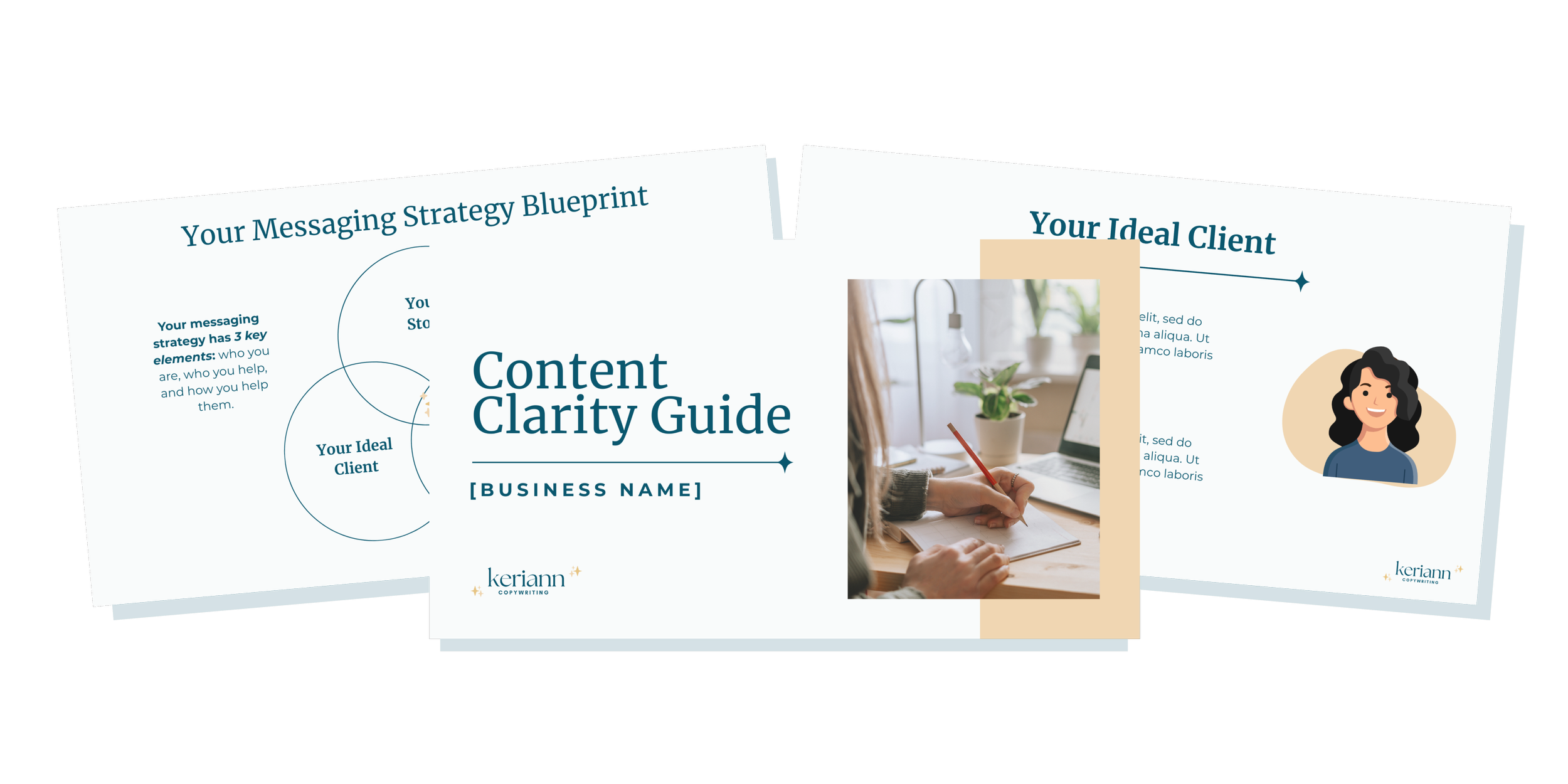
Together, we'll define all three elements for your unique business, and how each one connects to the types of content you’re going to create.
You’ll walk away with a custom messaging guide built around your business, your offers, and your audience, plus a workbook and a repeatable framework you can use to create content that feels like you.
If you’re ready to finally invest in your messaging and make content feel A LOT easier, book a call with me below so we can chat next steps:

Hey, there! I’m Keriann
I help online coaches, practitioners, and service providers turn their expertise into strategic and engaging content.
